Friday, 30 March 2012

6. Gregory Crewdson

Gregory Crewdson is an American photographer, known for his film-like set ups of neighbourhoods, American streets and inside American homes. This is because is photography is always about small town American, and the darker side to this.
       He sets up his shoots using a production team and cinematic lighting to create the perfect moment he wants to photograph. Crewdson also uses a photography director, and doesn't take the photograph himself. This is because he see the art as the scene he creates, and uses photography as a way of recording this. Crewdson uses actors in his shoots, hiring local people to help with the creation of his art.
       Due to the lighting used, the expressions on the actors faces and the atmosphere created in his photography, it is clear that Crewdson has set his images up. Everything in the photo, the colours involved and the angle the photo has been taken on has al been done on purpose, which adds to the success of his work.

5. Cindy Sherman

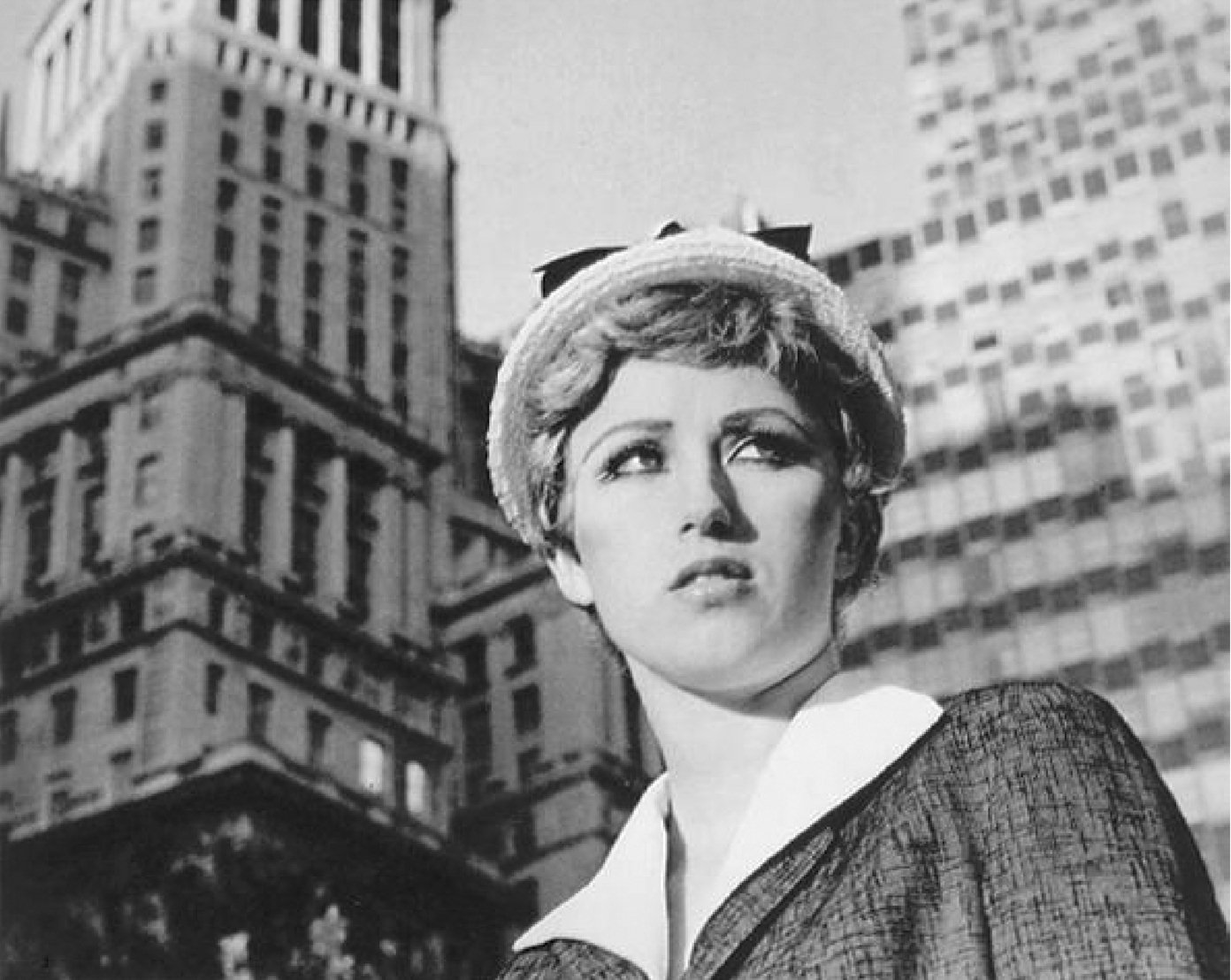
Cindy Sherman was born in 1954 in Glen Ridge, New Jersey (New York). She is an American film maker and photographer, most famous for her portrait photography of herself. Her work has helped raise questions about the role and representation of women in today's society, the media and the nature of the creation of art.
       Sherman's photography work often involves her creating a character and taking on a new identity in order to take the photographs she wants. As she works alone and uses herself in her work, she has to take on several roles including author, director, make-up artist, hair stylist, wardrobe director and model. The majority of her photos are shot in her studio. When creating these photos of specific characters, she usually works in series, changing outfits and facial expressions throughout each shoot until she gets a series of images she is happy with. Cindy Sherman doesn't consider her photos to be self-portraits because part of the process of setting up her shoots involve her creating a different character to herself and taking on a different identity.
       Even though Cindy Sherman doesn't consider herself to be a feminist, there are elements of her work which call this into question. For example, many of her pieces such as the 1981 Centrefolds, draws the public’s attention to how women are stereotyped in films, magazines and on television.

4. Martin Parr

Martin Parr is a British documentary photographer. He was born on May 23rd 1952, in Surrey, and has been a member of Magnum Photos since 1994.
       Parr is best known for his black and white photography, but switched to colour in 1984. His work tends to take a critical look at modern society, specifically consumerism, foreign travel and tourism, motoring, food, family and relationships. When using photography for documentation, there is usually a consistent element in his groups of photographs. For example, Parr took a series of photographs of houses in places including Wolverhampton and Bristol. Not only was the consistent factor the house, but he would also have the residents standing outside/in-front of their house. I like the idea behind this work because it gives an insight into the types of people who live there and kind of community it is part of.

3. Henri Cartier-Bresson

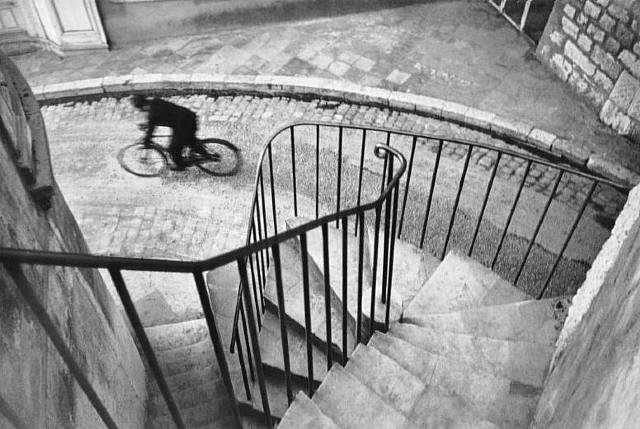
Henri Cartier-Bresson was a French photographer who was the founder of photojournalism. Before becoming a photographer, he studied painting. This helped him in his photography work because it allowed him to identify and create good compositions within his work. By the age of 21, Cartier-Bresson had already made his name as a photographer.
       One of the most familiar concepts in photography is “a decisive moment” in which you press the button at your chosen time to capture the moment you want. Henri Cartier-Bresson was well known for using this concept in his work. His most famous image of a man jumping over a puddle shows Cartier-Bresson's decisive moment to capture that specific moment in time. Taken a second later, is photo would look very different, and wouldn't be as successful.
       As well as being influenced by his time as a soldier and many of his other travels, his work was also effected by the introduction of the Lieca in 1925. This is because it allowed photographers, including Henri Cartier-Bresson, to photograph movement without any blur.
       In 1947, Henri Cartier-Bresson help to found the photography association, Magnum Picture Agency. Magnum is seen as the photographers “holy of holies”.

2. Alexander Rodchenko

Alexander Rodchenko was a Russian painter, sculptor, photographer and graphic designer. He changed form painting to photography when he saw painting as “dead”. He took advantage of the flexibility of the Leica camera. Photographs could be taken from any angle, instead of the usual “belly button photography”, where photos were all taken from the same level (belly button level).
       Even though he changed to photography, he combined his photography skills with his abilities in graphic design to produce photo-montages. A photo-montage is a graphic technique, taken from cinema montage. They are created by collecting, cutting, pasting, editing and re-photographing images to create a new, unique photograph.
A lot of the work Rodchenko's photo-montages were created for “USSR in construction”, a propaganda magazine he designed, glorifying the Soviet system showed their successes. It was devoted to the White Sea Canal, which was built be criminals and rehabilitated through labour. It was here that he got many of his raw images, ready to cut up and use for his photo-montages. However, these criminals were in fact political prisoners, and 200 000 of them died during the building of the canal.

1. Henry Fox Talbot

William Henry Fox Talbot was born in 1800, England, and died in 1877. An inventor and pioneer in the photography world, Talbot created photography and is the reason it is how it is today. He was a proto-photographer who experimented with ways of fixing the shadows. He wasn't very good at drawing, which caused him to start thinking about the camera obscurer and chemical processes. Talbot experimented with paper coated in silver salts and shoe-box sized camera, nicknamed mouse traps.
       At the same time that Talbot was trying to fix the shadows, he was rivalled by a French artist called Louis Daguerre. His process of fixing the shadows involved using a mirrored metal plate, known as “a mirror with a memory”. Daguerreotypes cause the ink to sit up in the surface, instead of sinking into the image like a photograph, which is why light is reflected back .
Unlike Henry Fox Talbot's method, it didn't allow an image to be reproduced as it didn't create any negatives, which is why Talbot's method was far more successful.